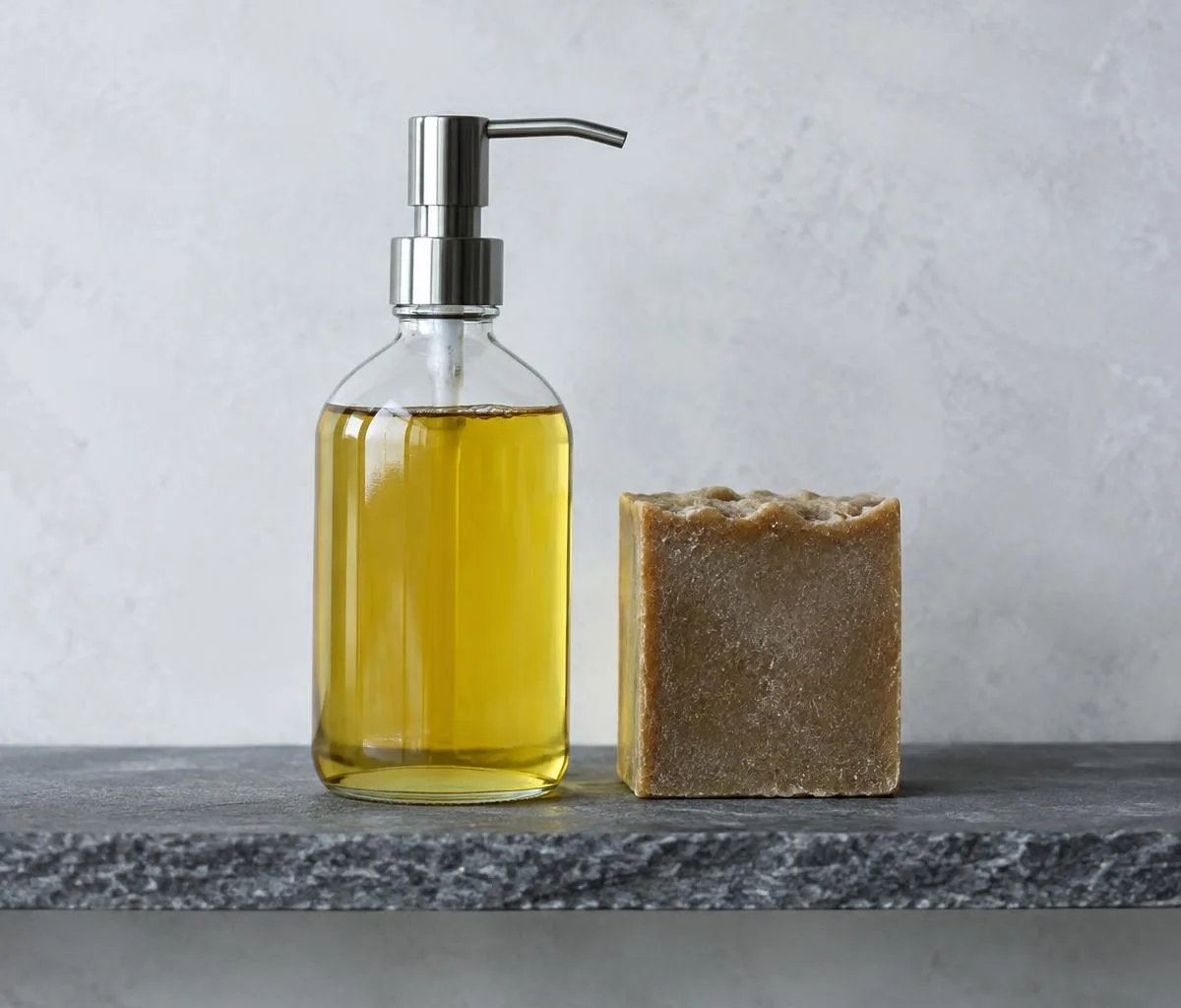
Discover how the naturally acidic surface of healthy skin keeps harmful environmental organisms in check. You will learn to decipher cleanser labels and select formulations that leave your cutaneous ecology undisturbed.
- Healthy surface skin maintains a mildly acidic pH between four and five.
- Alkaline soaps raise skin pH temporarily, weakening the protective acid coat.
- Choosing syndet bars with neutral or low pH helps prevent post-wash tightness.
On damp November mornings along the Canal Saint-Martin, the air carries a chill that bites the cheeks before you even reach the bakery on the corner. Inside the apartment, turning the brass tap releases water drawn from the Parisian basin, rich in limestone and heavy minerals. When this hard municipal water meets an ordinary bar of traditional soap, your skin does not just get clean. It undergoes a profound chemical shift that alters its thinnest, most protective layer for hours.
That protective shield is the acid mantle. First described in 1928 by German physicians Heinrich Schade and Alfred Marchionini, this delicate, acidic film coats the stratum corneum, the outermost layer of your epidermis. Far from being an inert barrier, it is a dynamic biochemical system operating at a slightly acidic range between pH 4.4 and pH 5.5. Understanding how this ecosystem functions, and how conventional cleansing disrupts it, is the first step toward caring for skin exposed to central heating, cold wind, and calcified tap water.
What the acid mantle is made of: sweat, sebum, and microflora
The acid mantle is not a single secretion. It is a biological emulsion formed by the continuous blending of three distinct components: the watery secretions of eccrine glands, the lipid-rich output of sebaceous glands, and the metabolic byproducts of resident microscopic organisms. Each contributor delivers specific chemical compounds that stabilize the skin surface against environmental assaults and pathogenic microbes.
Sweat provides the aqueous base. It carries lactic acid, sodium chloride, urea, and an array of free amino acids derived from the breakdown of filaggrin proteins within the keratinocytes. Lactic acid serves as a primary endogenous buffer, keeping the local hydrogen ion concentration elevated. Sweat also releases dermcidin, an antimicrobial peptide that remains active specifically within an acidic environment, keeping foreign bacteria from gaining a foothold in the pores.
Sebum supplies the lipid fraction. Produced by the sebaceous glands clustered heavily on the face, chest, and back, sebum consists of triglycerides, squalene, wax esters, and cholesterol. As sebum travels up the follicular canal, microbial enzymes hydrolyze a portion of the triglycerides into free fatty acids, particularly sapienic acid and lauric acid. These free fatty acids reinforce the low pH and exert direct antimicrobial action against opportunistic pathogens.
The third component is the resident microbiome. Beneficial bacteria, dominated by Staphylococcus epidermidis, Cutibacterium acnes, and non-pathogenic corynebacteria, thrive in this acidic terrain. They consume sweat components and sebum lipids, producing short-chain fatty acids such as propionic acid and acetic acid. This continuous microbial fermentation maintains the acidic baseline, making the skin inhospitable to transient, pathogenic bacteria such as Staphylococcus aureus and Streptococcus pyogenes, which require a neutral pH to flourish.
| Component Source | Primary Chemical Constituents | Functional Role in Barrier Defense |
|---|---|---|
| Eccrine Sweat Glands | Lactic acid, urea, minerals, amino acids, dermcidin | Maintains hydration, supplies water-soluble buffers, delivers antimicrobial peptides |
| Sebaceous Glands | Triglycerides, squalene, wax esters, free fatty acids | Prevents water evaporation, lubricates stratum corneum, provides lipid buffers |
| Resident Microflora | S. epidermidis, short-chain fatty acids, bacteriocins | Suppresses foreign pathogens, metabolizes sebum into stabilizing organic acids |
The measurement scale: why typical lye bars sit between nine and ten
The pH scale measures the relative concentration of free hydrogen ions in an aqueous solution, running logarithmically from zero to fourteen. Because the scale is logarithmic, each whole unit represents a tenfold change in acidity or alkalinity. A solution at pH 6.0 is ten times less acidic than one at pH 5.0. A cleansing bar with a pH of 10.0 is roughly one hundred thousand times more alkaline than healthy skin sitting at pH 5.0.
Traditional hard soaps are produced through saponification, an ancient chemical reaction combining plant or animal fats with a strong alkaline base, typically sodium hydroxide (lye). The triglycerides in oils such as olive, coconut, or tallow react with the hydroxide ions, yielding glycerol and the sodium salts of fatty acids, such as sodium olivate, sodium cocoate, or sodium stearate.
These fatty acid salts are weak acids bound to strong bases. When you wet a traditional bar under the tap, the salt partially hydrolyzes in water, releasing free hydroxide ions into the lather. As a consequence of fundamental chemical equilibrium, true saponified soaps cannot remain stable in an acidic or neutral state. If you add enough citric or lactic acid to bring a lye-based bar down to pH 5.5, the soap molecules revert back into unneutralized fatty acids, separating into an oily curd that loses its ability to foam or clean. Consequently, genuine saponified bars invariably sit between pH 9.2 and pH 10.2.
Superfatting, a practice common among artisan soap makers where an excess of unsaponified oil (often between 4% and 8%) is left in the bar, softens the physical feel of the wash. However, superfatting does not lower the pH of the soap salts themselves. The lather touching your skin remains distinctly alkaline during the wash.
How prolonged alkalinity encourages dryness and flaking
When an alkaline lather contacts the skin, it neutralizes the acid mantle almost instantly. This temporary shift from pH 5.0 to pH 8.5 or higher sets off a destructive cascade within the stratum corneum, disrupting enzymatic processes that govern hydration and structural integrity.
The stratum corneum relies on a delicate balance of specialized enzymes. Lipid-processing enzymes, specifically beta-glucocerebrosidase and acid sphingomyelinase, require an acidic pH of 4.5 to 5.5 to synthesize ceramides from precursor lipids. When the tissue becomes alkaline, these enzymes stall. Ceramide production plummets, leaving the lipid bilayers disorganized and leaky, which allows transepidermal water loss (TEWL) to accelerate sharply.
Simultaneously, neutral and alkaline environments activate a group of enzymes called kallikreins, or stratum corneum tryptic enzymes. These serine proteases degrade corneodesmosomes, the protein rivets that bind dead skin cells together. Under normal conditions, they dissolve these bonds in a slow, orderly fashion at the surface. Under sustained alkaline stress, they activate prematurely throughout the outer layers, leading to irregular shedding, rough texture, micro-fissures, and visible flaking.
Combining alkaline soap with mineral-rich tap water compounds the damage. The calcium and magnesium ions dissolved in hard water react with sodium fatty acid salts to form insoluble precipitates, commonly known as soap scum. These calcium-fatty-acid complexes deposit directly onto the keratinocytes, resisting rinsing and causing persistent mechanical irritation that compromises the barrier further.
Reading ingredient panels for gentle synthetic surfactants
To clean skin without forcing it into an alkaline state, chemists developed synthetic detergents, or syndets, in the mid-twentieth century. Unlike saponified soaps, synthetic surfactants can be formulated and buffered with organic acids to match the exact physiological pH of healthy skin, typically between 4.8 and 5.6.
Syndet cleansers, whether in solid bar form or fluid wash gels, use surfactants derived from plant sugars, coconut fatty acids, or synthetic feedstocks. Learning to read the ingredient panel (INCI list) allows you to distinguish between an alkaline traditional soap and an acid-balanced alternative.
- Sodium Cocoyl Isethionate (SCI): An anionic surfactant derived from coconut fatty acids. Known colloquially as baby foam, it produces a dense, creamy lather while remaining mild and functionally stable at a skin-compatible pH of 5.0 to 6.0.
- Coco-Glucoside and Decyl Glucoside: Non-ionic surfactants created by reacting plant-derived glucose with fatty alcohols. They carry no electrical charge, cause exceptionally low protein denaturation in the stratum corneum, and help reduce the irritation potential of other surfactants.
- Sodium Lauroyl Methyl Isethionate: A water-soluble, sulfate-free anionic cleanser that rinses cleanly without leaving films or stripping structural lipids, often used in premium gentle facial washes.
- Cocamidopropyl Betaine: An amphoteric surfactant that carries both positive and negative charges depending on solution pH. It acts as a secondary surfactant, boosting foam stability while buffering against dryness.
Conversely, if an ingredient list begins with saponified oils, such as Sodium Olivate, Sodium Palmate, or phrases like saponified oils of sunflower and coconut, the product is a true soap with an alkaline pH, regardless of how many soothing botanical extracts have been added to the blend.
Restoration timeline: how long healthy skin takes to recover its natural balance
The human body possesses an inherent capacity to restore its acid mantle after washing, but the recovery is neither instantaneous nor guaranteed under repetitive stress. The speed of recovery depends heavily on baseline health, environmental exposure, and age.
Following a single wash with an alkaline lye bar (pH 9.5 to 10.0), the surface pH of healthy young skin jumps immediately to roughly 7.2 to 7.8. In an individual with robust barrier function, endogenous acid production begins right away. The skin secretes fresh lactic acid from eccrine glands and processes stored lipid precursors to generate free fatty acids.
- First 30 to 60 minutes: Surface pH begins to drop from its alkaline peak, typically resting around 6.5. Moisture evaporation rates remain high during this initial window.
- Two to three hours post-wash: The stratum corneum approaches a sub-neutral state, hovering around pH 5.8. Ceramide synthesis enzymes slowly reactivate as the micro-environment normalizes.
- Four to six hours post-wash: Full physiological acidity (pH 4.8 to 5.2) is re-established in healthy adult skin, provided no additional detergents or drying agents have been applied.
In mature skin, or in individuals prone to atopic dermatitis, eczema, or xerosis, this timeline slows dramatically. Reduced sebaceous activity and diminished filaggrin production extend the recovery window to eight, ten, or even fourteen hours. If a person washes their face or hands three times a day with high-pH soap, their skin remains in a perpetual state of alkaline imbalance, never returning to the protective acidic baseline.
Common mistakes
Caring for the skin barrier often falters on well-intentioned habits that work against epidermal chemistry. Here are four widespread errors to avoid:
- Assuming natural always means gentle: A cold-processed artisan soap made from certified organic olive oil and farmstead goat milk remains chemically alkaline. Natural saponification produces a high pH regardless of how pure the starting ingredients are.
- Using hot water to cut grease: Water heated above comfortable skin temperature dissolves essential intercellular lipids along with surface dirt, accelerating barrier degradation during the wash.
- Judging cleaning efficacy by squeakiness: That squeaky feeling when sliding a finger over wet skin is not a sign of pure cleanliness. It indicates that the lipid bilayer has been stripped and friction has increased between bare keratin cells.
- Over-compensating with heavy balms: Applying thick, occlusive oils over skin that has been stripped by alkaline washing does not correct surface pH. Occlusives trap moisture, but they cannot replace the missing organic acids or restore the stalled lipid-processing enzymes.
Practical steps for daily washing
Adjusting your daily routine to support the acid mantle requires simple, deliberate changes in your washing technique and product selection. You do not need an elaborate regimen to maintain physiological acidity.
First, inspect your current cleansers. If the label lists sodium hydroxide, potassium hydroxide, or saponified oils, reserve that product for household cleaning or occasional hand washing. Replace daily facial and body cleansers with syndet bars or low-foaming gels formulated between pH 4.5 and 5.5. Look for products that explicitly state their pH balance or feature mild surfactants such as Sodium Cocoyl Isethionate and alkyl glucosides high on the INCI list.
Second, moderate your water temperature and contact time. Keep shower water lukewarm, around 36 to 37 degrees Celsius. Limit direct running water contact on delicate facial skin to less than two minutes. If you live in an area with hard municipal water, gently pat the skin dry with a clean linen towel immediately after rinsing rather than allowing hard water droplets to evaporate on the skin surface, where they leave mineral crystals behind.
Third, apply an acid-buffering humectant within three minutes of exiting the shower. A simple fluid containing low concentrations of lactic acid, gluconolactone, or sodium hyaluronate helps immediately restore the surface to an acidic state while drawing moisture into the stratum corneum.
If you experience chronic redness, persistent stinging during product application, bleeding fissures, or oozing plaques, discontinue all surfactant cleansers and rinse only with cool water. These symptoms indicate a damaged barrier or an underlying dermatological condition such as eczema or rosacea. Consult a licensed dermatologist for targeted therapeutic treatment before introducing new cleansing products.
This publication provides educational reporting only: consult a board-certified dermatologist or municipal health officer for persistent skin conditions. Disclaimer